Friday, September 2, 2016

Stories from Fondwa to Fishers

I am an educator and a photographer.  I went to school to learn how to be an teacher and to develop my classroom skills.  I am learning how to be a photographer by watching, doing, failing, and trying again in the ongoing effort to improve this skill.


Fondwa, Haiti

Need a photo studio?  Problem solved!
Recently, I had the opportunity to travel to Fondwa, Haiti, to visit Fatima Orphanage, where for seven days I would be without electricity, running water, or a hospital.  Sounds great, huh?  I thought so, too, so off I went for a wifi-free week, leaving behind my husband and two preschool daughters.     

There were many moments on the trip that I will not forget, but one in particular sticks with me. While at the orphanage, I was bombarded by children incredibly curious about my "machine,” my camera.  They touched and talked about it constantly.  They soon learned that if I took their picture, they could immediately see the results on the digital screen.

After a time of taking pictures and showing them to students, I noticed a crowd begin to gather around my impromptu photo booth.  That's when I saw this shot. Their shoes were dirty, but their socks and uniforms were spotless.
What will be the life stories of these children?
Who will help them tell their stories?
Behind each pair of shoes is a story.  These children traveled many different routes to end up standing right where they were when this image was taken.  They are different ages and genders and have different interests.  They may not be related, yet they all live all together and care for one another as if they are family.  
What makes a family?
This question is especially intriguing when at an orphanage.


These children ache to touch, feel, explore, wonder, and learn. These feet belong to a group of children who are curious and capable.  At the time, I wondered about the life stories of these children: “Where will these feet take them?”

The picture of the feet is one of my favorite photographs from my trip, and the one I plan to hang in my office.


Fishers, Indiana

At a meeting this past week, I saw a series of intriguing pictures created by HSE students.  They were beautiful black and white images of hands, eyes, mouths, ears, and feet.  
Georgi Coldren's second graders created this display
based on the book The Best Part of Me.

These pictures came from students at Cumberland Road Elementary.  The class had read The Best Part of Me by award winning photographer Wendy Ewald.  The students discussed the book and turned this activity into a community-building project in order to get to know one another at a deeper level. They all decided to capture the "best part of them" and to write why. That is a story worth telling! 
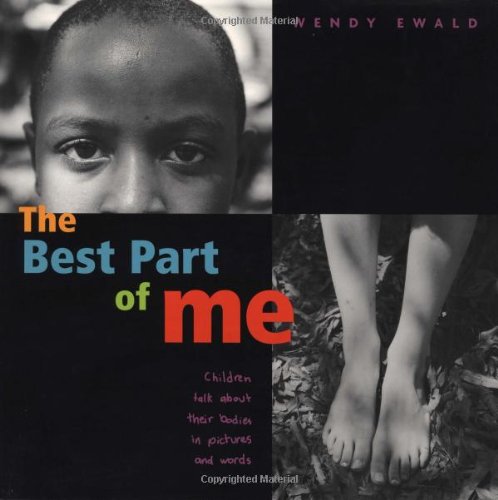
The cover of Wendy Ewald's book

As I looked at the images of the HSE students, I asked myself the same kind of question I did last summer in Haiti, "What are the stories behind these images?"


Creativity and Telling Stories

Those children in Haiti and those children in CRES are just like my own two at home, and they are just like the thousands who walk through our doors in HSE.  Each student has a story to tell, and teachers can help give them voice.
Fatima's girls at home.
What story will they write?

This past summer at Launching INquiry, I had the opportunity to listen to Dr. Justin Tarte.  He recently posted this:

We live in a world that is changing more rapidly than ever before.  To thrive, children must learn to design innovative solutions to unexpected problems. Their success and satisfaction will be based on their ability to think and act creatively. Knowledge alone is not enough; they must learn how to use their knowledge creatively. 

We can help our student thrive by helping them create and innovate and by helping them tell their stories.  We can document their learning when we capture their stories for display. Our classrooms, our display cases, and our hallways should be packed with student-created images that show authentic inquiry, as well as play and innovation.  

I challenge each of us to go beyond simply capturing the images.  Have students tell the stories behind the images.  And teachers, we need to tell the stories of what is happening in our classrooms and in our schools as well.

Collectively, our walls and halls can tell the story of our HSE21 journey.  

Whether they live in Fondwa or Fishers,
our children have stories to tell!


 Respond to Fatima at frich@hse.k12.in.us


We hope you create and tell wonderful stories this week, HSE!

Your HSE Teaching and Learning Team
  • Jan Combs, Assistant Superintendent of Teaching and Learning
  • Stephanie Loane, Director of Elementary Education
  • Tom Bell, Director of Special Education
  • Jeff Harrison, Director of Educational Technology
  • Phil Lederach, Director of Secondary Education
Justin Tarte will be with us on November 8 for our school
wide professional development.  For more about Dr. Tarte,
visit his website:
Life of an Educator


Friday, August 26, 2016

Invasive Species

Brent took this picture standing
in the Eel River.
Standing in middle of the Eel River in northern California, I felt extremely blessed to be surrounded by the some of the most dramatic scenery our country has to offer.  The river zig-zags alongside.  The Highway of the Giants, a 32-mile stretch of enormous redwoods, picturesque mountains, and the famous Pacific coastline. 

Fly-fishing is my favorite hobby, and I could not be in a better spot.

As time passed, however, I wasn’t catching any fish. I tried various dry-flies and nymphs throughout the morning, but things didn’t get better.  Maybe this wasn’t my day. Maybe I was going to be “skunked.”
While wading back to my entry point, I kept casting, and finally my line went taut!  Adrenaline coursed through my veins as I landed a beautiful but unusual fish—a species that I had never caught before. 
What a great catch--or is it?

Being a proponent of “catch-and-release” fishing, I quickly snapped a picture and let my new friend go back to his environment.  I was absolutely certain that this unusual fish had a very important role to play in the ecosystem and that I was doing the right thing by letting it go.

Shortly after leaving the river and driving down the highway, I found a nature center with wildlife models to help with plant and animal identification.  When I went inside, to my great surprise, I found a figure that looked identical to the fish that I had just caught. The sign under the model labeled it a “Sacramento Pikeminnow.”  The sign went on to describe how this fish is actually an invasive species relocated by humans several decades ago. 

As it turned out, this beautiful fish species is almost single-handedly destroying the Eel River ecosystem. In fact, the DNR pleads with fisherman to keep the Sacramento Pikeminnow and not release it back into the waterway.  My discovery completely changed the way I looked my catch.

Invasive Species in the Classroom

What does my disappointing fishing story have to do with instruction?  Like the “beautiful” fish that did not belong in the Eel River, could there be good-looking lessons, activities, and/or teaching practices that do not belong in our classrooms? 
Highway of the Giants

If we are going to make the HSE21 shift, we will need to make changes from some former teaching patterns because of their invasive nature.  These are practices which tend to kill off innovative learning and can actually destroy the classroom environment for our young people.

An Example from Kylene and Bob
 
Monologic questions check understanding.
Dialogic questions create understanding?
Is using too many monologic questions
 an invasive species in our classrooms?
Kylene Beers and Bob Probst ask us hypothetical questions on page 61 of Reading Nonfiction: “Do we really have time to let students create meaning? Wouldn’t it be more efficient to simply tell them what they need to know?” Going on from there, they contend that creating meaning is the essence of learning—even though it’s messy and slow.  Rigor is not found in controlling the input of all knowledge. It’s actually found in the struggle, the energy, and the attention students bring to the task at hand. 

If Kylene and Bob are right—and there is no doubt they are—one invasive classroom practice might be the overreliance on telling, rather than having students create meaning.  A classroom built on telling limits innovation and squelches student voice, choice, and learning.

A Key Question: What are Invasive Species in HSE?

A German proverb says, “To change and to improve are two different things.”  The change process is purposeful and involves removing invasive classroom practices.  The shift to HSE21 will require careful discernment and reflection; however, it is critically important to preserve classroom environments that foster engagement and inquiry and result in greater student learning.
When should we catch and release
an instructional strategy, and
when should it not be returned
to the classroom?

Perhaps one invasive species is fostering an overly-controlled school environment.  Maybe, it is using single-perspective text which prevents students from wrestling with deeper issues. Could another invasive species be focusing more on numbers in school data, rather than identifying the reasons for the achievement (or lack thereof)? Another might be that we have become afraid of and avoid courageous professional conversations. 

When we do identify the equivalent of Sacramento Pikeminnows in our classrooms and schools, we need to remove them as soon as possible in order to preserve an environment that fosters engagement, inquiry, and improved student growth.


When it comes to invasive species—in the Eel River or in our classrooms—don’t catch-and-release!

Brent giving a demonstration of
his hobby to students.


Respond to Brent at bfarrell@hse.k12.in.us


We hope your week is a great one!

Your HSE Teaching and Learning Team
  • Jan Combs, Assistant Superintendent of Teaching and Learning
  • Stephanie Loane, Director of Elementary Education
  • Tom Bell, Director of Special Education
  • Jeff Harrison, Director of Educational Technology
  • Phil Lederach, Director of Secondary Education

Friday, August 19, 2016

Let It Go!

From Jan

I was visiting a kindergarten classroom last spring when the teacher came up to me with a little one who really wanted to sing a song for me.  This cute little girl stepped forward with her karaoke microphone and confidently and powerfully sang every word of “Let it Go” from the movie Frozen.


Idina Menzel in the making....
My first thought was, “Out of the mouths of babes!”  How many times do we hold on tight to something when we should “let it go”?  It is part of human nature to cling to what we know, to what is familiar.

Hamilton Southeastern Schools has committed to a very different path.  The School Board set a vision several years ago that makes clear a commitment to a vision for what we want students to experience in our classrooms.  In order to have HSE21 classrooms we are going to have to let go of practices that no longer fit. 

As educators it is imperative that we model:

  • An openness to a new way of doing things
  • Deeper conversations about why we do what we do
  • A willingness to look at the worthiness of the work we are asking students to do every minute of every day.  
  • A commitment to one another to engage in pedagogical conversations that will take us to new places as educators
  • A willingness to experience cognitive dissonance—real change leads to a sense of disequilibrium and dissonance
  • A willingness to be a risk-taker

When I was in college (far away from home and homesick) I was in the bookstore and saw a poster that said, “You cannot discover new oceans unless you have the courage to lose sight of the shore.”

It’s time, HSE family, to “let it go!”  Let go of those things that keep us mired in practices that do not lead to engaged students involved in authentic and rigorous work.  Let go of the shoreline that keeps us from discovering new oceans. 

 Thanks for your commitment to move this district forward in the transformation to HSE21 instructional practices and rich learning environments for our students!

Your HSE Teaching and Learning Team
  • Jan Combs, Assistant Superintendent of Teaching and Learning
  • Stephanie Loane, Director of Elementary Education
  • Tom Bell, Director of Special Education
  • Jeff Harrison, Director of Educational Technology
  • Phil Lederach, Director of Secondary Education


Respond to Jan at jcombs@hse.k12.in.us

Friday, August 12, 2016

What Matters Most

Last Monday, Julie Alano and Dr. Bourff rang in the school, Janet Chandler had us laughing and choking back tears, and we heard from Kylene Beers and Bob Probst.  Many of you are familiar with their most recent book, Reading Nonfiction.

Stances, Signposts, and Strategies.  They are all in here!

In this definition there is no reference to making work
harder or accelerating the pace.
The title they chose is both descriptive and misleading.  They definitely write about best-practice instruction and how to improve student learning through the use of nonfiction text, but this book includes much much more.  It gives concrete ways to improve classroom conversations, to promote inquiry, and to increase student engagement.  It is about redefining what rigor in the classroom is all about.  It encourages us to give students voice and ownership in their learning.  In short, it is about schools and classrooms becoming intellectual communities.

These intellectual communities include students, as well as all of the adults in the district!
Ask your students for their definition of "nonfiction."
Most will answer, "Not false," "true," or a variation on this theme.
Why should these answers trouble us?
Questions Worth Asking

What are your answers to these questions Kylene Beers and Bob Probst use to generate discussions in schools?
  • Do you think of your school as an intellectual community?
  • Do you think of your classroom that way?
  • Do your students see their classrooms as intellectual communities?
  • What happens if the answer to these questions are yes?  More importantly, what happens if the answer is no?
In an article called “What Matters Most: Considering the Issues and the Conversations We Need to Have," Kylene Beers makes this comment about these questions:

Whether using these prompts or creating your own, the conversations you have in the coming months about intellectual community, about rigor, about close reading, about what it means to inspire, about reclaiming the grand purpose of education, about recognizing all the bad things that happen when the profit motive and the purpose motive become unhinged are well worth your time.  These conversations might lead us to understand what matters most.

The full article can be read at this link: What Matters Most


So welcome back, HSE.  We hope your year is a great one, one in which all HSE students, teachers, and administrators learn and grow together.  

Your HSE Teaching and Learning Team
  • Jan Combs, Assistant Superintendent of Teaching and Learning
  • Stephanie Loane, Director of Elementary Education
  • Tom Bell, Director of Special Education
  • Jeff Harrison, Director of Educational Technology
  • Phil Lederach, Director of Secondary Education
An easy way to start: Use the first question.
Try it right now.
What surprised you when you read this blog entry?


Friday, May 20, 2016

Reflection and Anticipation

In education, the days are long, but the years are short.  You are likely feeling that now as we enter the last week of school.  Soon, this week, too, will come to an end, and you will enter the time when teachers breathe a little easier.

At this time of year, we experience this truth!

The hope of the Teaching and Learning Team is that you find time to rest, relax, and rejuvenate.  We also hope you take time to reflect on this past year, and when you’re ready, do some reading and thinking about next year.  When that time comes, maybe you can return to this week’s blog to get ideas. 

This week, each of us shares a bit of our current thinking.  Some of it is reflection, and some of it anticipation for what will come next year.

From Stephanie: Partnership with Ritchey Woods…HSE 21 Pushes Us to Consider the Benefits of On Site Study Trips

With the help of an amazing group of first grade teachers we were able to launch a new and exciting partnership with the Fishers Parks and Recreation Department at Ritchey Woods. Mrs. Danesa Stolz, is Chief Naturalist.  She worked with first grade teachers to design our program titled, Nature First! This is a true example of HSE21 as our first graders experienced two on-site study trips and four classroom expert visits to increase their background knowledge and allow for more successful project work opportunities.

We look forward to our continued partnership for next year and are incredibly grateful for the commitment and funding from our Fishers Parks and Recreation Department. A massive thank you to our naturalists, bus drivers, parent volunteers, and brave teachers who fearlessly lead little ones through trails, rescued snails, collected leaves, helped with mittens, washed muddy boots, and marveled in the magic of wide-eyed children!


Ahhh…. It makes your soul breathe!

I just wanted to take a moment to tell you how incredibly amazing our trip to Ritchey Woods was today.  I was thoroughly impressed with the amount of curriculum STUFFED into this amazing trip.  This was such a great way to introduce kids to an amazing feature right here in our town that is FREE.  I can see many of them going back.  Danesa, Sam, and Hannah were so knowledgeable and the instruction was SPOT on our first grade standards.  They were great at talking right to the kids in the terms and instruction that they needed.  Questioning was great . . . . . just amazing.  Thank you for making this opportunity available for our kids. They had a blast.  We will definitely be able to use this information to springboard from in our classroom throughout the year.  WOW!!!  Thank you!  --Heidi, SCE Teacher

From Jeff: Choice

Over this last year, the Teaching and Learning Team has been emphasizing the importance of choice. This was apparent in blog entries, where student choice was highlighted. Members of the Teaching and Learning team talked to PTO families on the notion of choice when emphasizing renting iPads or providing their own iPads for next year. Members of our staff and community exercised choice when casting their ballots on the referendum vote earlier this month. 


This spring, members of the Technology Department gave teachers choice about what type of device they would like to work with next year. Teachers and administrators used inquiry to look at how they plan on using the device next year and research which device would meet their needs. These last four weeks have been very exciting for Technology staff as the devices have been delivered; teachers, too, were excited to receive their new devices.

As we look towards next year, I am eager to see what types of choice our students are presented!

From Phil: Three Questions

On the first official day back next fall, we will all get together as a district, like we have in the past.  One difference, however, is that along with the normal welcome back, we are going to hear from Kylene Beers and Bob Probst, whose most recent book is Reading Nonfiction: Notice and Note Stances, Signposts, and Strategies.
Read it and think!

The title of this book is a little deceptive.  True, it is about reading.  Specifically, it is about reading in all classes and all content areas.  But it is more than that.  Kylene and Bob will share current research about many of the things we have been working on in the district: student engagement, inquiry, rigor, and best-practice instruction.  In short, their book helps show what an HSE21 classroom can look like and sound like.

A small sample from the book:

Fiction invites us to take one stance.  The novel invites us to explore the imagined world the writer has created for us.  We enter it willingly, and if we don’t enjoy it, we put the novel down, acknowledge we just don’t like this author or this genre, and move on.  If we do enjoy it, we stay there until the end, maybe so immersed in it that we might describe ourselves as ‘lost in the book.’  Nonfiction, on the other hand, should come with a cautionary note that reminds us that getting lost in the text might be dangerous.  The reader needs to remember that a work of nonfiction will try to assert something about his world, and he needs to take those assertions with a grain of skepticism.  They may be perfectly true, they may be somewhat slanted or biased, or they may be flat-out lies.  The slightly skeptical stance implies three [big] questions…

If you are looking for a book to read this summer, I recommend this one.  As you read it, you might ask yourself “The Three Big Questions”:
  1. What surprised me?
  2. What did the authors think I already knew?
  3. What changed, challenged, or confirmed what I already knew?

You will hear more about Kylene and Bob next year, but I encourage you to read ahead if you get a chance.

From Tom: The Road to Success is Always Under Construction

As I look back on the 2015-2016 school year, many thoughts come to mind.  There were challenges and successes throughout the year, but the thing that enters my mind most frequently is that we are in the middle of a journey. 
Take time to look back at the progress and forward to the journey ahead.


We are traveling a long road that has many obstacles and stretches with pot holes that need to be fixed, but we continue to move forward in our journey towards HSE21.  You can look in the rearview mirror and see a road that was once under construction by a road crew of students, teachers, and administrators working tirelessly to reach the goal of rich learning experiences for all. 

The road behind is smooth, but we must continue to focus on our goal of HSE21 and address the challenges that lay ahead in our continued journey down this road.  Although we took many positive steps this past school year, we must continue building a way forward that keeps us moving toward the ultimate goal of success for our students.  

From Jan: The Journey

A great big thank you to everyone as we prepare to close out the 2015-16 school year.  It has been an amazing year as we continue to clarify the “big picture” of HSE21 and move our district further into the dissonance that is a natural part of change and transformation.  The successful referendum will give us much needed resources that will help support us on that journey. 


The coming weeks hopefully will give everyone some time to reflect, question, think, and dream.  Thanks for all you have done to support our students.  I look forward to continuing the walk with you on this journey. 

Have a great summer, HSE Family!

Your HSE Teaching and Learning Team
  • Jan Combs, Assistant Superintendent of Teaching and Learning
  • Stephanie Loane, Director of Elementary Education
  • Tom Bell, Director of Special Education
  • Jeff Harrison, Director of Educational Technology
  • Phil Lederach, Director of Secondary Education
Don't forget to register for Launching INquiry, hosted at Fishers High School on July 19 and 20. We have great sessions and speakers lined up.  This conference is for ALL levels of teacher, K-12!


Friday, May 13, 2016

Rigor: Round 2

Two weeks ago, our topic was rigor.  Dr. Bourff started by making a distinction between rigor and rigor mortis.  Stephanie made the argument that “Rigor is Love.”  Jan encouraged us to look at the work that was being assigned and ask the question, “Is it worthy work?”  Phil suggested that rigor in the classroom can be seen and heard when students talk to create understanding.

We ended the blog by writing this: 

“We would love to hear from you.  
Send us your ideas about what rigor is and what rigor is not.”  


Well, you did it, HSE!  We chose three of the responses for this week's blog.  The first  comes from one of our elementary teachers, and she tells the story of her daughter.  We found her story both moving and inspirational.  The second part came from a high school math teacher, but her message applies in every class in the district.  The third part comes from a Teacher Development Specialist adding to the "IS/IS NOT" chart.

Enjoy!

From Deneice Mathias Jerrett: 
The Relationship between Engagement and Rigor

A few years back, while still in high school, one of my daughters really struggled with piles of what she considered to be meaningless or too difficult homework.  She made very poor grades. She had all the supports and abilities to be successful, but she did not engage in her schoolwork.  She gave me plenty of gray hairs, but looking back, I feel I can brag a little now.
Deneice and her daughter, one of those "creative kiddos"
we do not want to lose!

She somehow managed to get into IUPUI after a year at community college for remediation. She went on to excel at Purdue's Engineering and Design school, graduating with honors.  The difference between her high school and college experience (besides her age and maturity) was that the tasks in design school were engaging, project-based, authentic, and I dare say, rigorous!

I reflect on her story often because there are many lessons to be learned from it. I couldn't make my daughter be engaged in school.  Mothers don't have that power, nor do fathers—even when we take the car keys away.

The tasks presented at the university did engage her deeply. She worked on real projects, making presentations with real clients. It was life-changing for her. I am sure that many of the lessons learned in school paved the way for her success.  I often wish she would have had more opportunities for rigorous work, and by that I mean engaging, real-world work.
What is the relationship between engagement and rigor?
I am grateful for the dedication of educators who are re-imagining our schools as learning laboratories, as places alive and vigorous! (Maybe vigorous could be a replacement term for rigorous.)

We must reach these creative kiddos who are non-compliant, who won't just go through the motions of playing school. It is an at-risk population for sure, and these students have so much to offer the world.

I have a postscript to this story as well: A few weeks ago, a group of teachers and administrators from HSE visited the University of Indianapolis to participate in “Re-imaging Libraries.”  My daughter was the designer who planned this event.  It is a bit ironic, but it makes sense that she is interested in finding ways to redefine education.

From Tish McCallister: 
Redefine Rigor

Tish is the Math Department Chair at Hamilton Southeastern High School, and she sent us a copy of an ebook she is reading called What is Math Rigor? The authors make the point that we are in trouble if we think of rigor using this definition:


Instead, we need to think about rigor this way:


 Which should lead us as educators to redefine that elusive word rigor!


From Fatima Rich, Teacher Development Specialist:
Additions to Our Chart!

What Rigor IS
What Rigor IS NOT
·         Choice 
·         Reading
·         Researching
·         Writing 
·         Reflecting
·         Revising
·         Revisiting
·         Questioning
·         Investigating
·         Analyzing
·         Confirming
·         Reassuring 
·         Challenging but Fun
·         A task in which I can complete quickly.
·         Something I know all the answers to. 
·         Isolated
·         Boring
·         A checklist 
·         Worksheet
·         Asked for often enough
·         A project of no interest 


Thanks to all of you who replied and contributed to the blog this week.  We are likely to return to this topic again and again.

Have a great week, HSE!

Your HSE Teaching and Learning Team
  • Jan Combs, Assistant Superintendent of Teaching and Learning
  • Stephanie Loane, Director of Elementary Education
  • Tom Bell, Director of Special Education
  • Jeff Harrison, Director of Educational Technology
  • Phil Lederach, Director of Secondary Education


One Final Thought: Chris Tovani makes the distinction between "rigor" and "hard."

Rigor invites engagement. Hard repels it. When learners are engaged in something rigorous, they lose track of time. When the activity is hard, time drags on. Learners who experience rigor, feel encouraged, self-confident, and have a sense of accomplishment. Hard is often trademarked by discouragement, avoidance, and a feeling that the effort spent doing the activity has been a waste of time.  

One of Tovani's Great Books!


Friday, May 6, 2016

Creating Memories and Motivation

From Phil: Add One More

Whether this is your first year in education or you’ve been at it a long time, when you think of the word school, you likely have images that pop into your head.  That is the way memories work.  They come to you with visual clues, sometimes vague and blurry and sometimes crystal clear. 

In my more-than-a-few-years in education, many of my memories are a bit blurry and run together.  A few, however, are sharp as tacks.  Here is a short list of the later type:
  • The First Day of Teaching: Less than a month after our wedding and still reeling from the move to a new country, Lisa and I left our apartment and walked the two blocks to Academia Menonita, a small school located in the hills outside of San Juan, Puerto Rico.  We were on our way to meet our students for the first time as “real teachers.”  I remember the short walk as if it were yesterday.  We were so young, so excited, so scared, and so overwhelmed.
  • “Do You Remember Me?” I’ve been around long enough to have the experience of “hearing back” from students who long ago were in my classroom or school.  They often start the conversation by writing or saying, “Do you remember me?” When they take the time to call, write, or stop by to say thanks, it is meaningful in so many ways, and those experiences stand out in my memory.
  • Back Packs and Spiffy New Clothes: One-by-one, our own children had their own first days of school. We sent them off on the bus or down the hall, hoping for the best—and then experiencing the relief of knowing our children would be loved and cared for in our schools.
  • In My Heart: Some students, simply stated, are unforgettable.  They may be academically
    First day of school...
    Unforgettable!
    excellent, or they have pushed me to my limits.  Some overcome unbelievable odds and succeed, and others have shared laughter or tears.  The thousands of faces can merge together after many years of teaching and administration, but a few I can picture clearly.  For whatever reason, they are part of my heart.
  • Best Buddies: When I first arrived at HSHS, I was introduces to the Best Buddies program.  I watched these friendships in amazement.  The patience, compassion, and love the Buddies often share is inspiring, humbling, and memorable.  When I think of this program, in my mind’s eye, I see two Buddies walking hand-in-hand down the hall of the high school.

To this short list, I can add another from last Tuesday. 

Lisa and I took time to work the polls on Election Day.  We started in the cold and wet before daybreak, and worked a location that included many Cumberland Road Elementary families.  We saw lots of parents (often with their children in tow) turn out to support our schools.  Many of them knew Lisa and spent time talking to her on the way in or out.


Many more who had no connection to CRES expressed support and thanks for the good work going on in HSE.  Stop and consider the results of the voting for a moment:  Over 70% of the voters this past Tuesday voluntarily chose to support our schools by raising their own taxes—and many thanked us during the process.


That is exciting, overwhelming, and humbling.  It is motivating and provides impetus, perhaps even a moral obligation, to continue to grow our capacity for teaching and learning in Hamilton Southeastern Schools.

It is a moment in time I will long remember!

Have a great week, HSE.  Finish the year well, knowing that your good work has been affirmed by our community.

Your HSE Teaching and Learning Team
  • Jan Combs, Assistant Superintendent of Teaching and Learning
  • Stephanie Loane, Director of Elementary Education
  • Tom Bell, Director of Special Education
  • Jeff Harrison, Director of Educational Technology
  • Phil Lederach, Director of Secondary Education